Exterior painting crews meet the wind in three ways: through the spray gun, through the wet film, and at the top of the ladder. Each one sets a different limit, and late fall, when fronts come through several times a week, is when all three show up at once.
The spray gun: overspray travels
Airless spraying breaks paint into very fine droplets, and fine droplets are light. Even moderate wind carries overspray well beyond the wall: onto cars in the driveway, windows, roofs, neighbors’ siding, and anything else downwind. Overspray claims are among the most common and most expensive claims against painting companies.
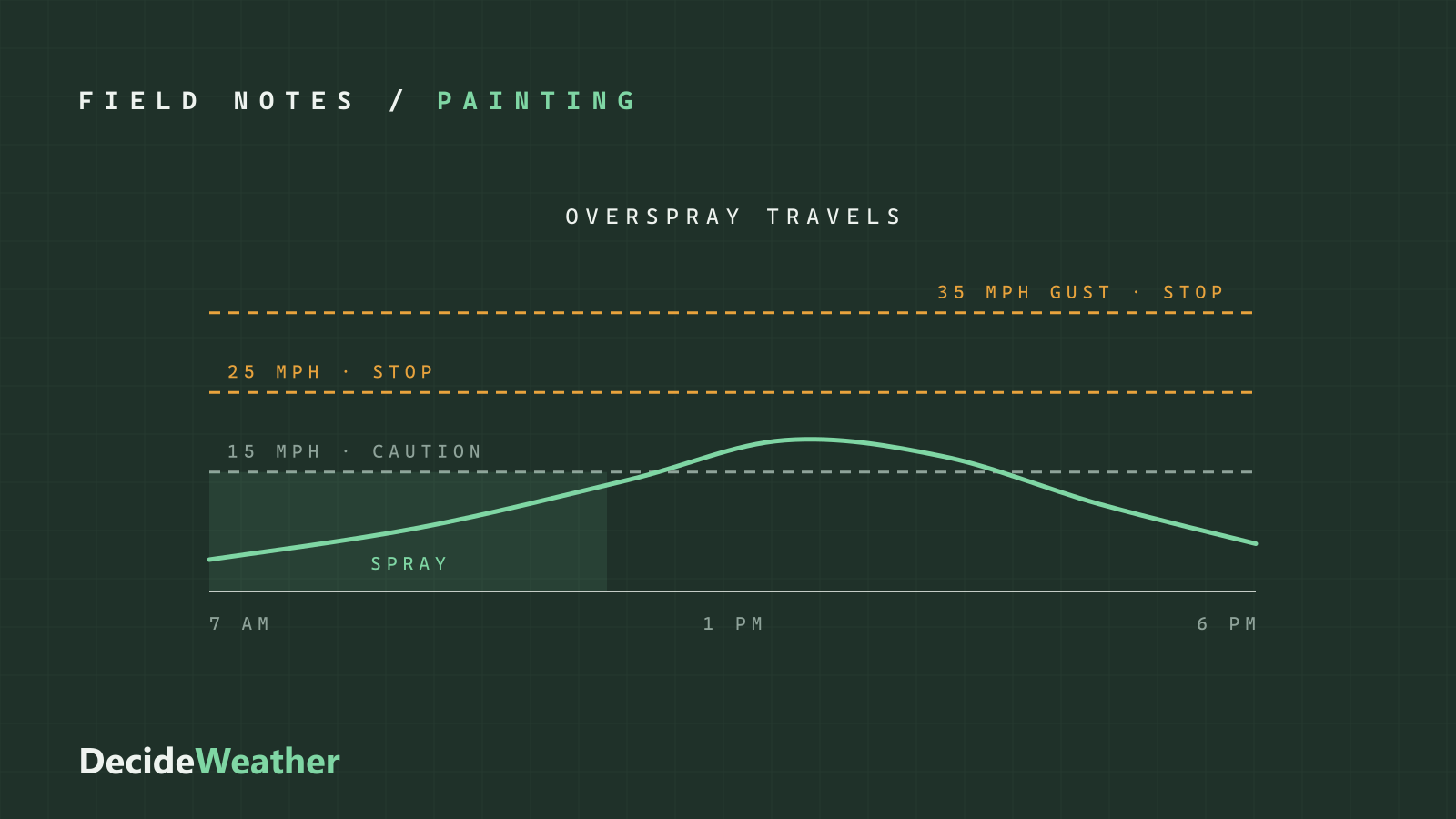
That’s why many crews stop spraying at roughly 10–15 mph, and lower near anything that can’t be masked or moved. The practical options when the wind picks up:
- Switch to brush and roller for the rest of the day.
- Spray the sheltered side of the building and save the windward side for a calm morning.
- Use shields and masking generously, but don’t expect them to stop drift in real wind.
The wet film: grit and lap marks
Wind causes problems even without a spray gun:
- Debris. Leaves, dust, seeds, and grit blow into wet paint. Late fall, with leaves coming down, is the worst season for it.
- Lap marks. Wind speeds up drying at the surface, so the leading edge of a section dries before the next section overlaps it. The overlap shows as a darker or glossier band.
- Poor flow. Paint that skins over too fast doesn’t level out, so brush and roller marks stay visible.
- Cold-weather chill. In November, wind also cools the surface. Combined with low temperatures, it can leave paint skinned on top and uncured underneath, one more reason fall painting is a narrow window.
The ladder: people come first
Extension ladders and wind don’t mix. A gust hitting a worker on a 28-foot ladder near a gable end, holding a bucket, is a fall hazard regardless of the paint. The same goes for roofing crews in gusts: gusts, not averages, catch people off balance.
Wind in the painting call
DecideWeather’s Painting operation reads wind for every hour:
- Caution: sustained wind from 15 to 25 mph, or gusts from 25 to 35 mph.
- Stop: sustained wind of 25 mph or more, or gusts of 35 mph or more.
Those are limits for painting in general. Spraying calls for a lower threshold, and the hourly bar on the Job Site card is where you find it: the calm hours are usually early morning, before the day’s wind picks up.
If you book the job in Scheduled Jobs, the app keeps watching those hours. If the wind forecast grows and eats into the job’s workable time, you get a push, such as “Weather cuts Thursday’s job short” with the longest workable stretch before and after. That’s time to reschedule the spray day before the crew is standing in the driveway.