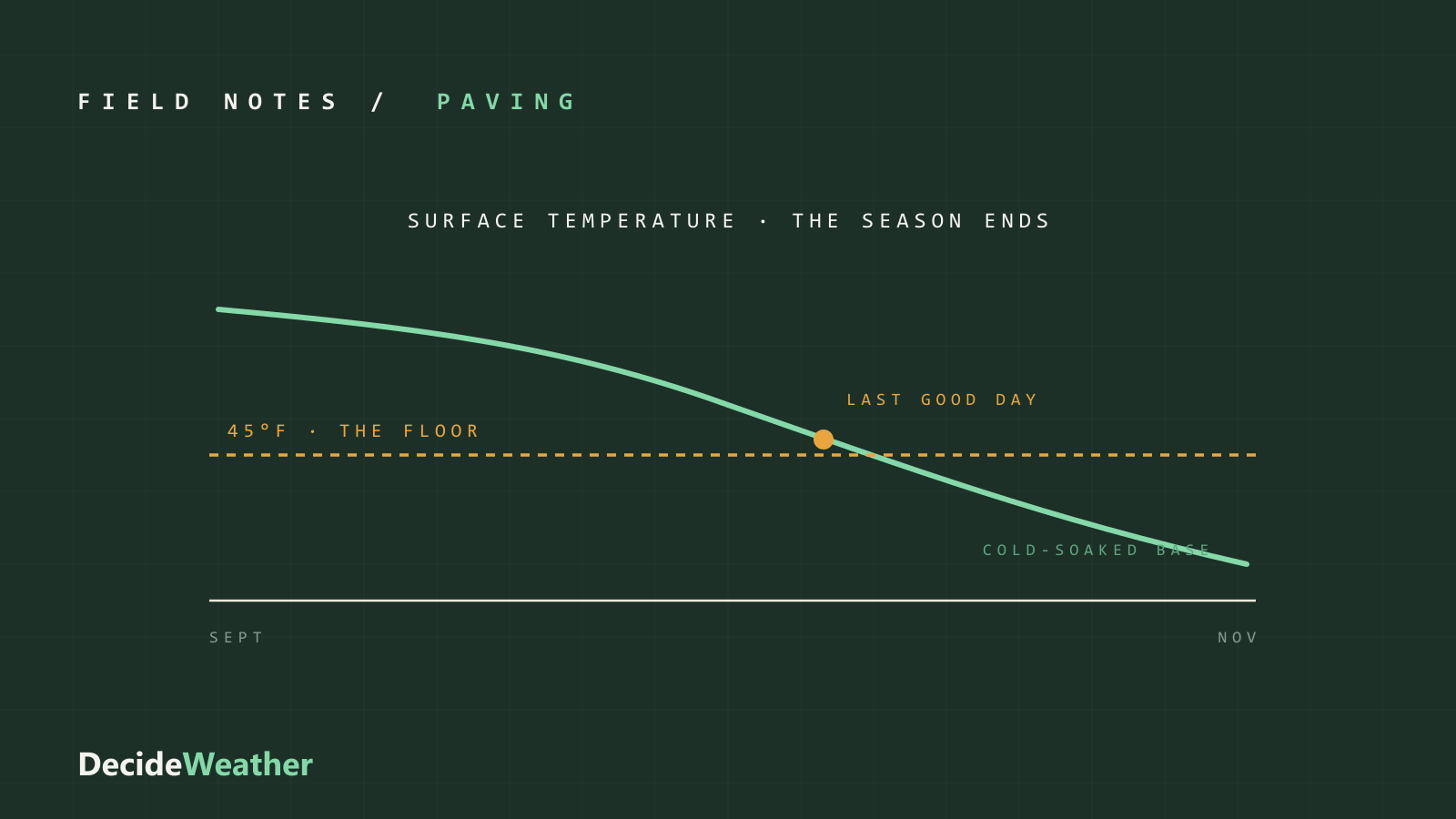
Nobody schedules the last paving day of the year. It just happens — some morning in late fall when the mat behind the screed stops cooperating, density numbers slide, and everyone quietly understands the season ended somewhere behind them. The better version of that story is knowing the floor and watching the approach, because the end of the season is visible weeks out in the surface temperatures.
The floor is a surface number
The working rule across specs and manufacturer guidance: conventional hot-mix wants a surface temperature around 45–50°F and rising, with thin lifts at the demanding end. The reason sits under the mat, not above it. A 300°F mat loses heat in two directions, and the base steals it far faster than the air does. Lay two inches on a 40°F base and the bottom of the lift is racing toward the compaction cutoff from the moment it leaves the screed.
And the base temperature is its own animal in fall. After a run of cold nights, a base can be cold-soaked ten degrees or more below a pleasant afternoon air reading — the surface-versus-air gap at its most expensive. A 55°F air forecast over a 42°F base reads like a paving day and performs like a marginal one.
The clock, compressed
We’ve covered the cooling clock — the minutes between screed and cutoff that size your roller train. Cold season is that post’s arithmetic with every variable turned against you: colder base, colder air, more wind, lower sun. A lift that gave you forty minutes in August gives you twenty in late October. The mat isn’t different; the window is. That’s why late-season density failures cluster at the back of the pull — the breakdown roller kept up, and the finish passes happened on a mat already below cutoff.
The adjustments that legitimately extend the season all buy back clock time: thicker lifts (more thermal mass), warm-mix additives (compactable at lower mat temperatures), shorter pulls and a tighter roller train (less mat exposed at once), and midday windows instead of first-thing starts, giving the base its few degrees of daily recovery.
The date on the spec vs. the morning on the ground
Agency calendars — NYSDOT and MassDOT both hold surface-course dates — are the contractual fence, but they’re deliberately conservative and they cut both ways: plenty of legal November days are physically bad, and the occasional warm stretch after the deadline is a spec conversation, not a weather one. The physical season ends site by site, morning by morning, wherever the surface temperature stops reaching the floor during your working hours.
- Watch the base, not the high — a string of cold nights matters more than one nice afternoon
- Rising beats falling — 48°F at 9 a.m. heading up is a different day than 48°F at 3 p.m. heading down
- Thin lifts quit first — overlays and top courses lose the season weeks before binder and base work
- Frozen base is the hard stop — no mix design paves over frost heave in the making
DecideWeather holds paving when temperatures sit below the workable floor and cautions through the marginal band above it, hour by hour against your working day — so the last good paving day of the season shows up as exactly that, before the density numbers announce it for you.