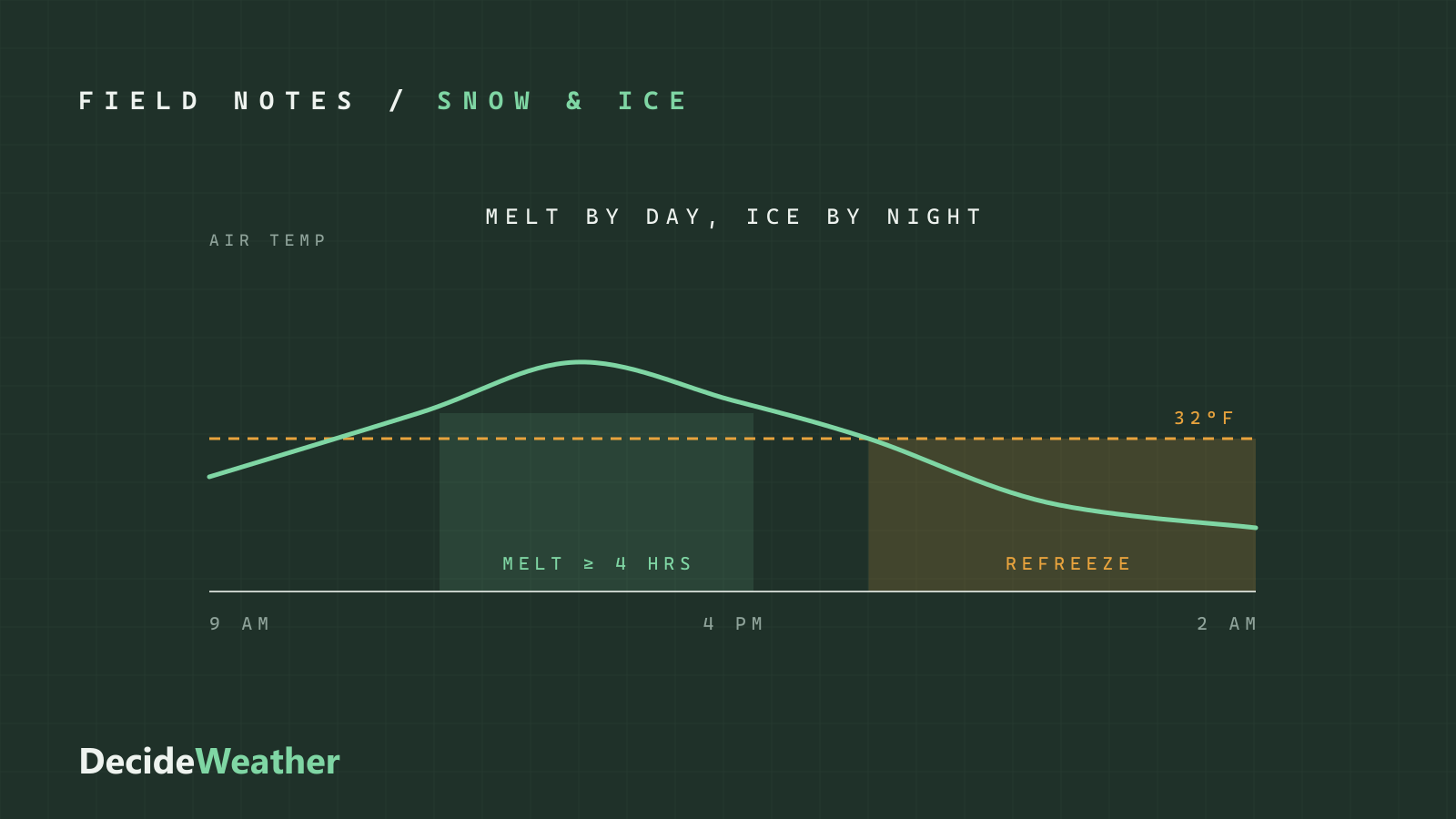
The storm ended two days ago. The lot was plowed and treated, and the afternoon was sunny and 38°F. At 6 a.m. a tenant falls in the parking lot, on pavement that looked wet. Most black ice doesn’t fall from the sky. The day makes it, and the night freezes it.
What black ice is
Black ice is a thin, clear layer of ice on pavement. It’s clear enough that the pavement shows through, so it looks like a wet surface instead of ice. That’s what makes it dangerous: drivers and pedestrians don’t adjust for it.
It forms in a few ways:
- Refreeze of meltwater. The most common cause for snow contractors. Plow piles and snowbanks melt in the afternoon sun, water runs across the lot, and it freezes after dark.
- Leftover rain or wet pavement when temperatures drop below freezing behind a front.
- Freezing drizzle and freezing fog, which glaze surfaces directly.
- Frost on very cold, clear nights, which can make pavement slick with no precipitation at all.
The refreeze pattern
The classic setup:
- Snow on the ground or wet pavement. There has to be water available.
- A melt period. Several hours above freezing, often in afternoon sun, produce meltwater.
- A drop below 32°F after sunset, often quickly on clear, calm evenings.
The hours right after the temperature crosses 32°F are when the glaze forms, and it can last well into the next morning in shaded areas.
Where it forms first
- Bridges, overpasses, and elevated decks, which lose heat from above and below.
- Shaded areas on the north sides of buildings and under trees.
- Low spots and drains, where meltwater collects.
- Below plow piles. The pile you built melts all afternoon and runs across the lot. The same pile is the source of the next morning’s ice.
The forecast air temperature can read a degree or two above freezing while those spots are already icing. Treat the forecast crossing time as the latest the ice will form, not the earliest.
Timing the treatment
The goal is to get material down before the water freezes, not after. Anti-icing on wet pavement before the freeze keeps the bond from forming. Deicing an established glaze takes more material and more time. It’s the same logic behind pre-treating for storms, just on a smaller, daily scale. It also means plow-pile placement matters: piles on high ground, draining away from traffic, don’t feed the lot every night.
Refreeze as its own event
DecideWeather’s Snow Ops treats refreeze as an event in its own right, not a footnote to the storm. A refreeze event appears on the Job Site card when:
- the air has been at or above 34°F for at least four hours (a real melt),
- it then drops below 32°F,
- and there’s water to freeze: an inch or more of snow on the ground, or at least 0.1 inches of precipitation in the previous eight hours.
The event includes a pre-treat window six hours before the freeze crossing, so the crew knows when material needs to be down. After a storm, a separate post-treat phase opens if a stretch of six or more hours below freezing follows the storm. It’s skipped if the site warms back above 34°F first.
One honest limit: the app reads air temperature. The spots listed above ice up before the air says so, so treat bridges, ramps, and shaded areas as running an hour or two ahead of the forecast.